Ir al contenido principal
Consulta de oncología

Estudio clínico PEARL (PotEntial of Asciminib in the eaRly treatment of CML)


PEARL

(PotEntial of Asciminib in the eaRly treatment of CML)

La Fundación Teófilo Hernando (FTH) participa en un ensayo clínico multicéntrico dirigido a pacientes con leucemia mieloide crónica (LMC) en fase crónica recién diagnosticados


Potencial del asciminib en el tratamiento de la LMC

El objetivo del estudio es investigar la seguridad y eficacia de asciminib como monoterapia y en combinación con nilotinib en la consecución y mantenimiento de respuestas moleculares profundas estables; reducir la progresión de la enfermedad e incrementar las oportunidades de alcanzar una remisión libre de tratamiento (TFR).

También se pretende determinar si este tratamiento en investigación puede ser más eficaz que las terapias actualmente utilizadas, reduciendo al mismo tiempo la frecuencia y gravedad de los efectos adversos, lo que repercutiría en una mejora de la calidad de vida de los pacientes.

Este proyecto de investigación cuenta con el apoyo de Novartis Pharma AG y está desarrollado por el Grupo Español de Leucemia Mieloide Crónica (GELMC) y la Fundación GIMEMA (Grupo Italiano de Hematología), co-promotores del estudio, que se está llevando a cabo en varios hospitales de España e Italia.

La FTH es responsable de la puesta en marcha y apertura de centros, monitorización y gestión del estudio en los diferentes hospitales de España durante los 7 años de duración del ensayo (2 años de reclutamiento, 2 años de fase central de tratamiento, 2 años de fase de consolidación del tratamiento y 1 año libre de tratamiento).

El estudio está autorizado por la Agencia Española de Medicamentos y Productos Sanitarios (AEMPS) desde el 24 de junio de 2025 y, hasta la fecha, 14 de los 15 centros participantes en España han comenzado el reclutamiento en junio de 2025, habiéndose incluido ya 12 pacientes de un total estimado de 80 en los centros españoles.

Para más información:
Continuar leyendo

Estudio clínico MammoWave

Nuevo dispositivo para la detección precoz del cáncer de mama.


The Teófilo Hernando Foundation (FTH), CRO in Spain and Portugal, supports a clinical study with a new device for the early detection of breast cancer

The participation of two of the participating sites in Spain, Hospital Universitario de Toledo and Hospital Universitario Reina Sofía de Córdoba, has already started, and the Hospital General
Universitario Morales Meseguer will begin shortly its participation. Since March, two sites in Portugal have also been participating in this study.

Madrid. 1st October 2024. The Fundación Teófilo Hernando (FTH) is pleased to announce its participation in an international, prospective, multicentric clinical study of a medical device for the early detection of breast cancer. The participation of two sites in Spain, the Hospital Universitario de Toledo and the Hospital Universitario Reina Sofía de Córdoba, have already been launched and patient recruitment has already begun. The University Hospital of Toledo has already participated in the previous validation phase of the device, with Dr Cristina Romero as principal investigator and clinical coordinator.

The clinical investigation is framed within the international research project MammoScreen, co-funded by the European Commission and UK Research and Innovation under the Horizon Europe
programme (Grant Agreement: 101097079), and is coordinated by Fondazione Toscana Life Sciences – TLS ( Italy). The study promoter is Umbria Bioengineering Technologies-UBT (Italy), in collaboration with JSB Solutions SRL, and will have the FTH as the CRO in charge of data monitoring and follow-up for Spain and Portugal. . In addition to the University Hospital of Toledo (which is also a partner in the MammoScreen project) and the Reina Sofia University Hospital in Cordoba, another site in Spain, the Morales Meseguer University Hospital in Murcia, will soon begin its participation. In Portugal, two sites have been participating since March 2024, the Champalimaud Foundation and the Dr. Angelo Passos Clinic. The study is also being conducted in Italy, Poland and Switzerland, and has already recruited 500 women in the active sites.

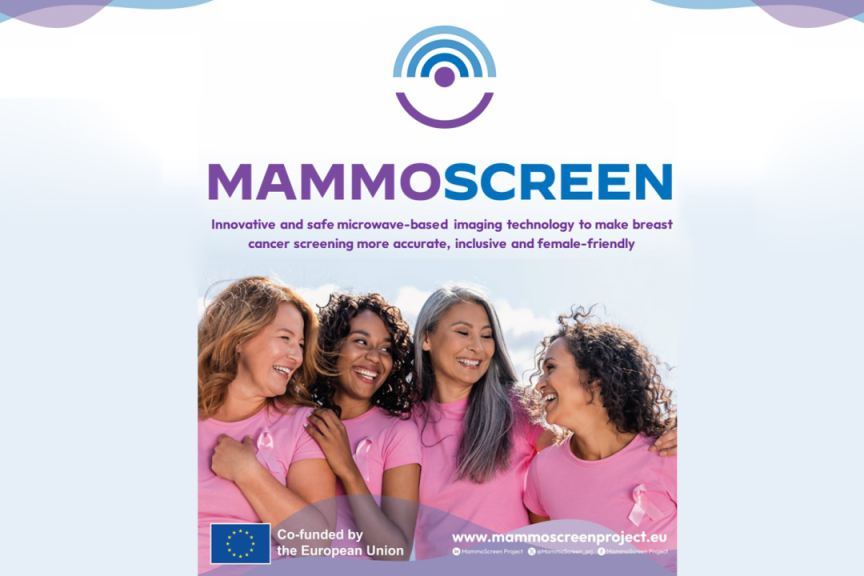
The overall aim of the MammoScreen project is to generate evidence on the use of MammoWave (a new device which avoids ionising radiations and breast compression), as breast cancer screening technique in population-based cohort already included in programs promoted by national or regional health systems. The goal is to make screening more accurate, inclusive and comfortable for women.

MammoWave uses very low-power, totally safe radio frequencies to generate microwaves images of the breasts and proved to be effective also in dense breast. Women lie face down, in a comfortable position, while the test is performed in less than ten minutes per breast.

This initiative is of great scientific and social importance, given that breast cancer is the most diagnosed among European women, with up to 190 new cases and 45 deaths per 100000 women.

Estudio clínico con REGENERA

Novedoso implante mamario para restaurar la mama tras la cirugía.


Fundación Teófilo Hernando, CRO in Spain of a pivotal clinical study with the first medical device designed to restore natural breast shape and sensitivity after partial mastectomy

The international study involves the Complexo Hospitalario Universitario de A Coruña in Spain and two other sites in Italy.

Madrid. October the 1st of 2024. The Fundación Teófilo Hernando (FTH) is participating as the CRO in Spain in a pivotal multicentre clinical study evaluating the safety and performance of the REGENERA medical device, a bio-compatible and bio-absorbable implantable structure that may have unique advantages in the treatment of postoperative breast tissue deficiencies.

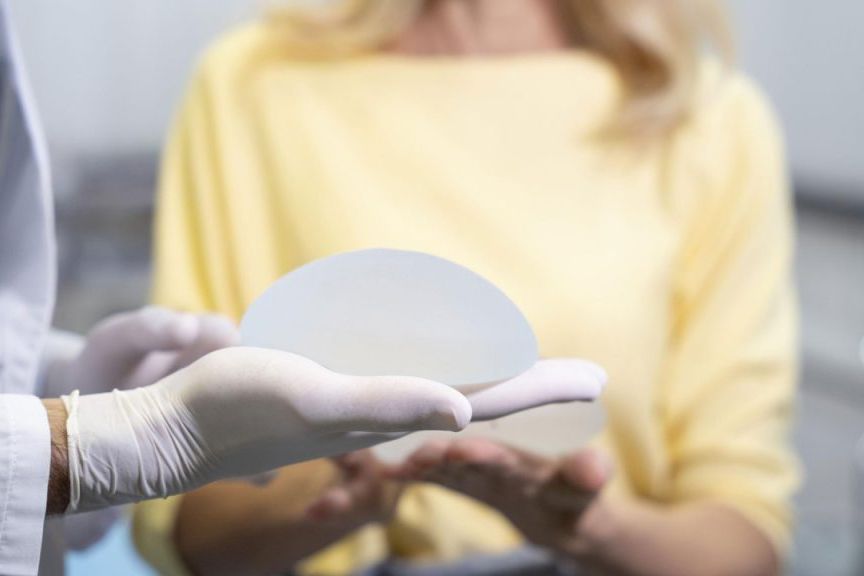
REGENERA, a bioresorbable polymeric scaffold, is the first medical device designed to restore a natural breast after removal (partial mastectomy) of a malignant breast lesion, as it is designed to degrade over time within the body and be replaced by the patient’s own soft tissue, restoring natural breast shape and sensation and avoiding a permanent implant. The shape and geometry of REGENERA has been established to facilitate its insertion at the implant site and to fill the volume deficit caused by the removal of the injured soft tissue after lumpectomy.

Unlike silicone implants and adipose tissue grafts, REGENERA does not require post-lumpectomy surgery, as the removed breast tissue is replaced by immediate implantation of the REGENERA medical device. This important variation reduces postoperative complications, pain and psychological impact for patients, which could lead to an improvement in their quality of life.

The international European clinical study, whose sponsor is the biomedical company TENSIVE S.r.l. (Italy), is being conducted in women aged between 40 and 70 years with a diagnosis of malignant breast lesion (with a maximum follow-up of 5 years). In Spain, the FTH is the CRO in charge of data monitoring and follow-up of the study at the participating centre, the Complexo Hospitalario Universitario A Coruña, which is already recruiting patients. The principal investigator of the study at this centre is Dr Benigno Acea Nebril.

In addition to the Spanish centre, two Italian centres are participating in the study: the Santa Chiara Hospital in Pisa, with Professor Manuela Roncella as coordinator and principal investigator of the study; and the European Institute of Oncology in Milan, with Professor Mario Rietjens and Dr. Mattia Intra as coordinators. At both centres, the study is also in the patient recruitment phase.

This is a project of great scientific and social importance, given that breast cancer is the most prevalent cancer among European women and this device can improve the quality of life of patients.